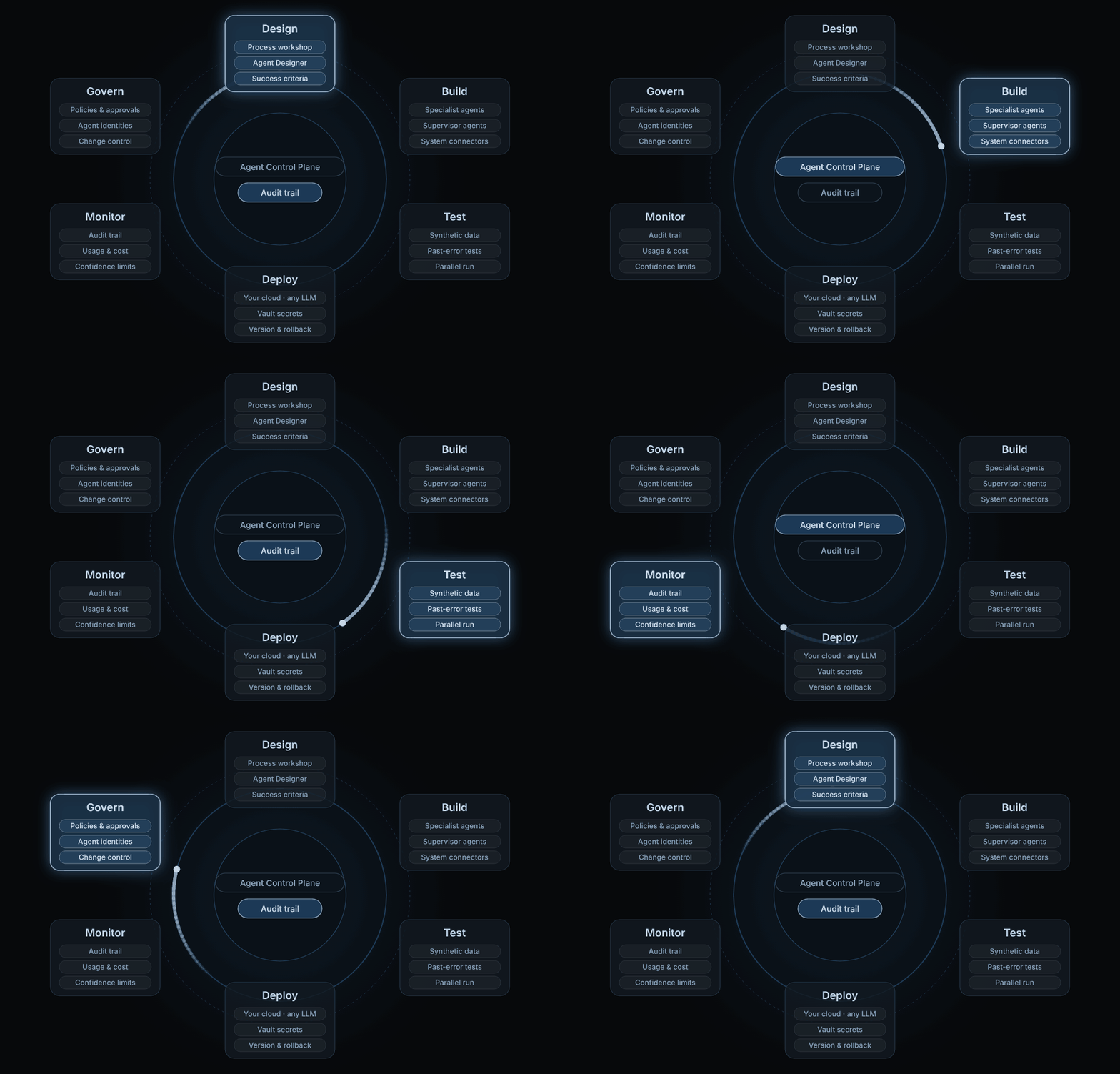
| Who did what, and who approved it? | Every agent action is logged with the requester, the approver and the agent's identity. Each finding cites its source. | An audit log of every action |
| Can an agent change the books? | No. Agents are read-only by default. A named person approves every action, nothing posts to your ERP without approval, and no agent approves or pays an invoice. | Approval records, and read-only access confirmed at the start |
| Who can see what? | Each agent has its own identity, separate from any person, with permissions limited to its task. An agent working on a person's behalf can't see more than that person can. | Agent identities and approval roles, set up with your IT team |
| Where does our data go? | Your data isn't used to train any model. Rules and files sit in your own tenant. Hosting regions are agreed with you, and personal-information detection runs on the data agents read. | Hosting regions approved by you up front |
| Can we trust the number? | Fixed rules check the numbers. Anything an agent is less sure of than the threshold you set (for example, 90%) goes to a person. A parallel run compares results with your existing reports, and every difference is explained. | Parallel-run results, report by report |
| How are changes controlled? | Every agent and rule is version-controlled with a change log. A named owner on your side approves each change, and the last approved version can be restored. Each agent is tested against past errors before your team sees it. | Change log and approval record |
| What does it cost to run? | Usage and cost are tracked for each use case. IBM watsonx Orchestrate is priced by messages, not tokens. | Running cost per use case, from the usage report |
| What if a key person leaves? | Octane names a primary and a backup for every role, and you name a second owner for each rule. Handover is accepted only when the agreed tests pass. | Named backups, and handover tests at acceptance |